Icons
The Theology of Icons
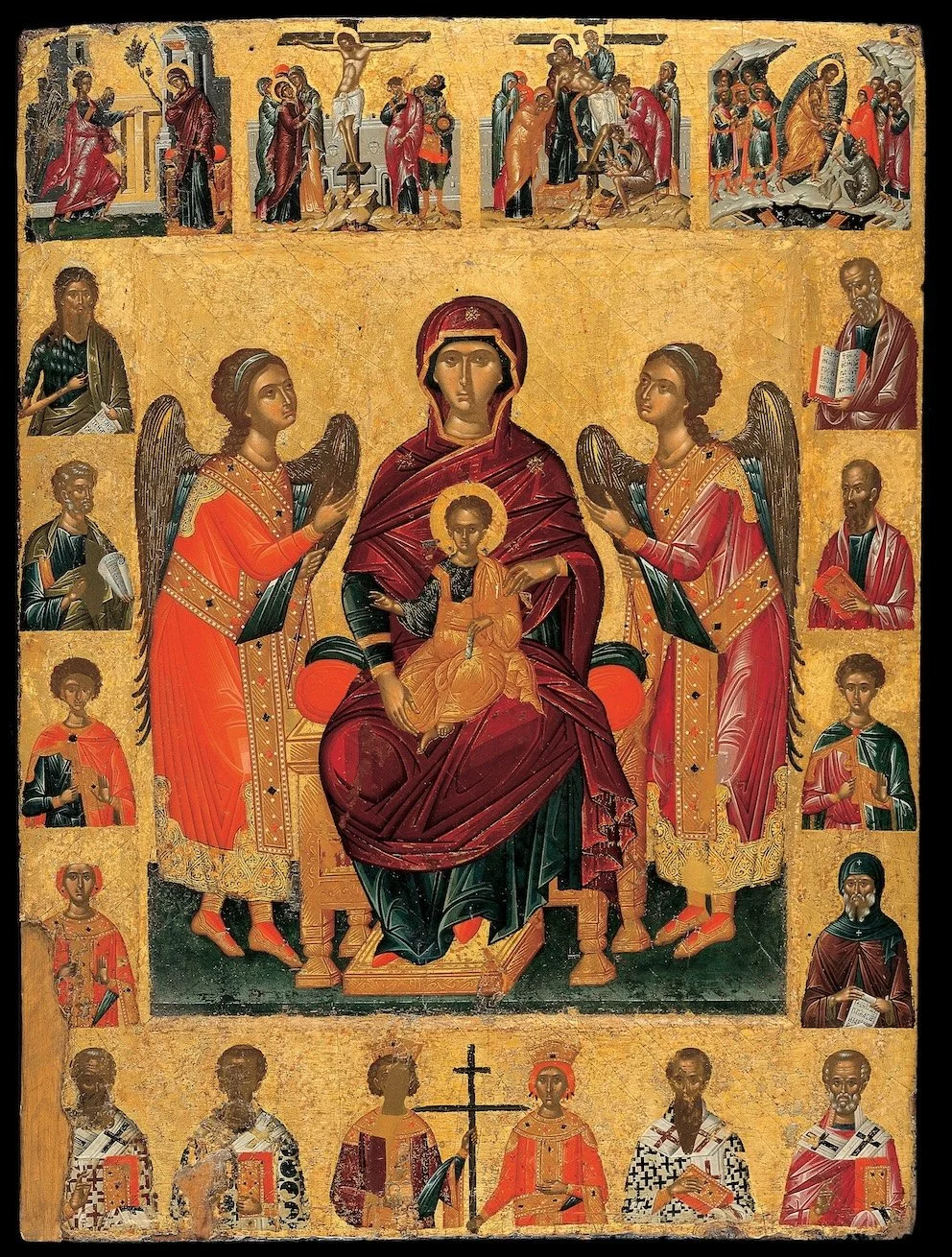
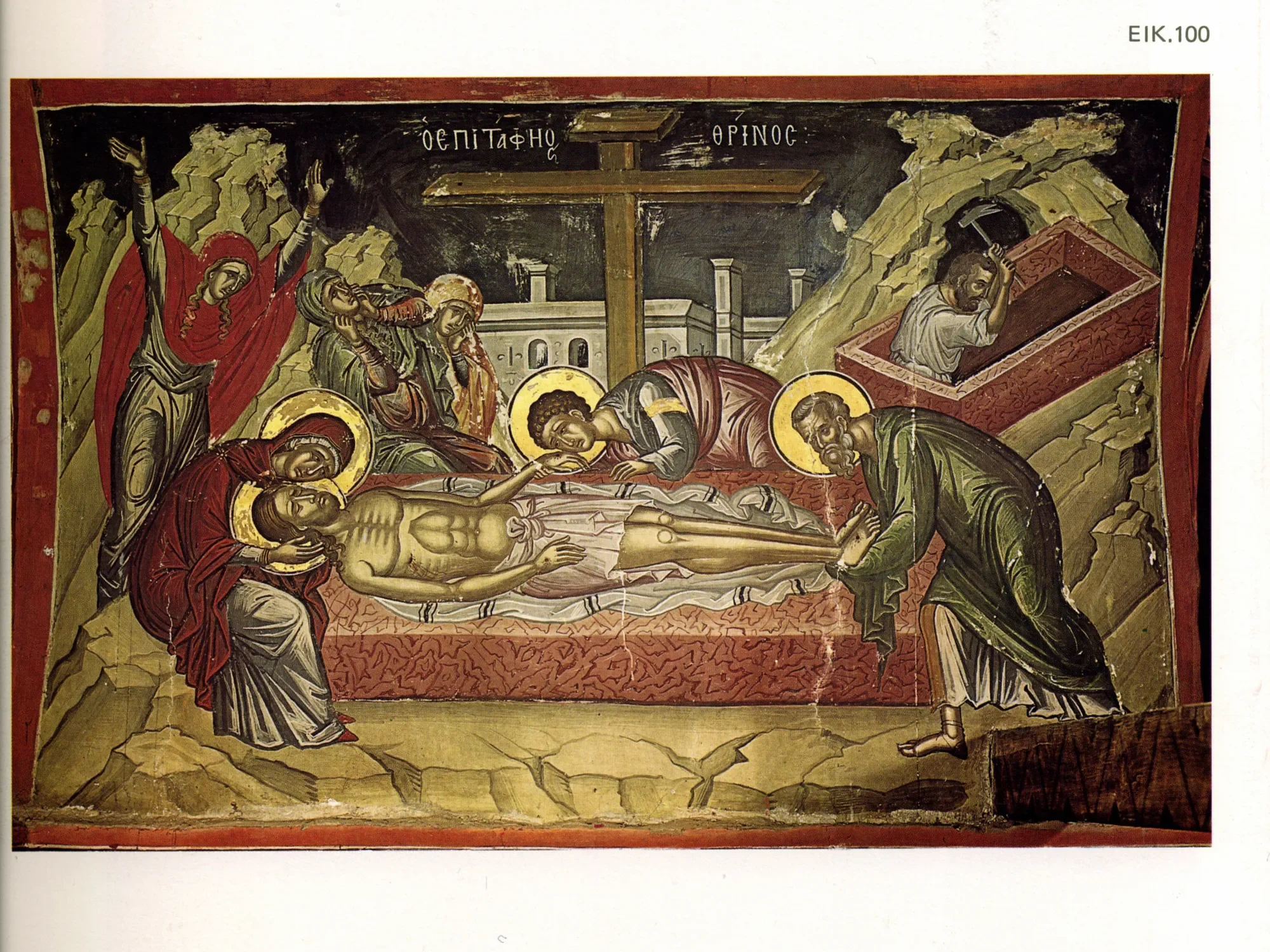
In the Orthodox Church, icons are not merely religious art or visual aids. They are witnesses to the reality of God’s presence.
The Incarnation: The theological foundation for icons is the Incarnation. Because "the Word became flesh and dwelt among us" (John 1:14), God, who is invisible, became visible. Therefore, He can be depicted. To deny the icon is, in essence, to deny the reality of Christ’s human body.
Window to the Kingdom: Icons are witnesses of the Kingdom of God. They do not just remind us of the past; they make the holy person present to us in a spiritual way.
The Iconostasis and Church Design
The Iconostasis (icon screen) does not exist to hide the altar, but to show our unity with Christ and the Saints.
The Royal Gates: The central doors represent the entrance to the Kingdom. They typically feature the Annunciation (the beginning of salvation) and the Four Evangelists (the proclaimers of the Gospel). Above them is the Mystical Supper, showing that the Church is the continuous participation in the banquet of the Kingdom.
Placement: To the right of the gates is Christ; to the left is the Mother of God.
Church Architecture:
Christ the Almighty (Pantocrator): Located in the center of the dome/ceiling, ruling over all.
Mother of God: Located in the apse over the altar, representing the Church as the "container of the Uncontainable."
The Iconoclast Controversy (726–843 AD)
For over a century, the Byzantine Empire was torn apart by the controversy known as Iconoclasm ("image-breaking").
Phase I: The Isaurian Emperors (726–787)
The Attack: Emperor Leo III, blaming Church "idolatry" for military losses to Muslims and natural disasters, banned the veneration of icons in 726 AD. His son, Constantine V, escalated the persecution, calling a false council in 754 AD that condemned icons as "evil art" and "dead matter."
The Defence: The theological defence was led by St. John of Damascus. He argued:
Matter is Good: "I do not worship matter; I worship the Creator of matter who became matter for my sake."
Veneration vs. Worship: He distinguished between latreia (absolute worship due to God alone) and proskynesis (relative honour or veneration given to saints/icons).
The Restoration (787 AD): The Seventh Ecumenical Council (Nicaea II) was convened by Empress Irene. It officially affirmed that icons must be venerated (honoured), and that "the honour paid to the image passes on to the prototype."
Phase II: The Final Conflict (815–843)
Resurgence: After military defeats, Emperor Leo V reinstated Iconoclasm in 815 AD, believing the iconophile emperors had lost God's favour.
The Defence: The resistance was led by the monks, most notably St. Theodore the Studite, who refused to cease venerating the holy images despite imprisonment and exile.
The Triumph of Orthodoxy (843 AD): The controversy finally ended under the regent Empress Theodora. On the first Sunday of Lent in 843 AD, the icons were permanently restored in a great procession. This event is commemorated every year as the Sunday of Orthodoxy.