Mary
Mother of GOD
The Theotokos: Mother of God
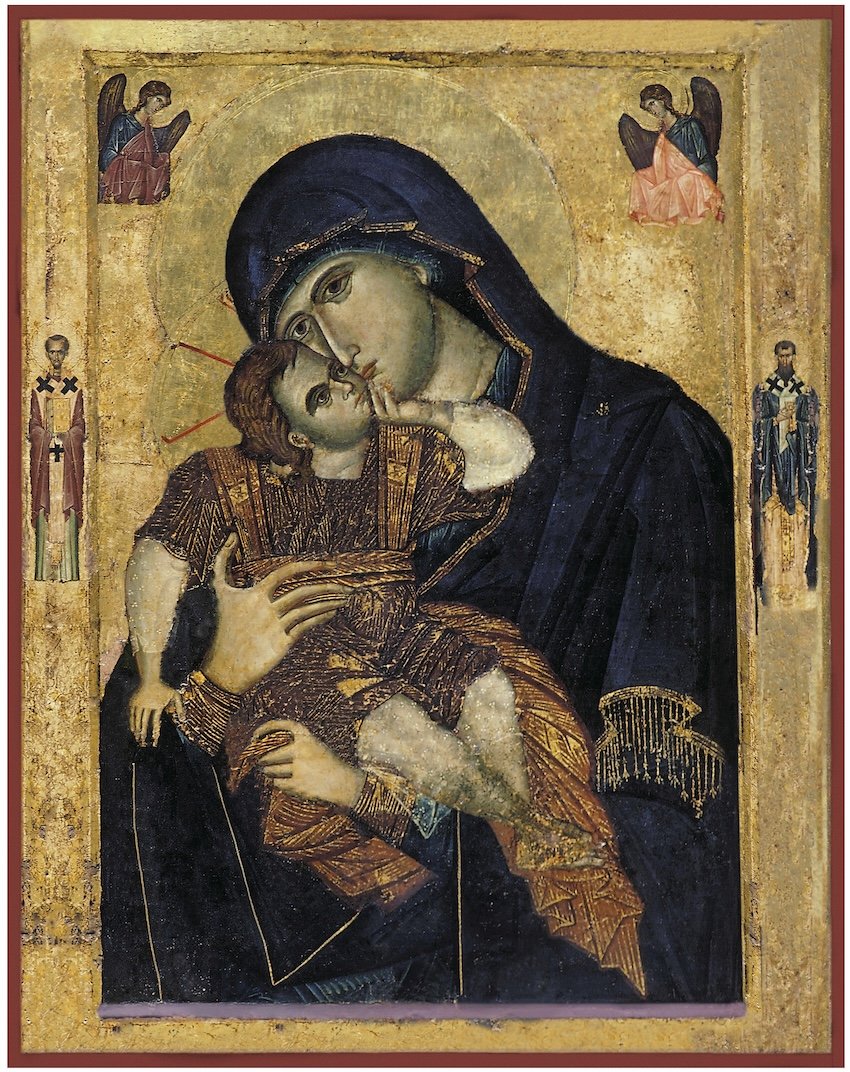
In the Orthodox Church, the Virgin Mary is honored above all other saints and angels. She is called Panagia ("All-Holy") because she is the supreme example of cooperation (synergy) between God and humanity.
I. Titles and Meaning
Theotokos (God-bearer): This title was dogmatically defined at the Third Ecumenical Council (Ephesus, 431 AD) to protect the doctrine of the Incarnation. It affirms that the child she bore was truly God. If Christ is God, then she must be the Mother of God. To deny this title is to deny that Jesus is God.
Ever-Virgin (Aeiparthenos): The Church teaches that Mary was a virgin before, during, and after the birth of Christ. This is visually represented in icons by three stars on her forehead and shoulders.
"Brothers" of Jesus: The so-called "brothers" of the Lord mentioned in Scripture are understood in Orthodox Tradition as either cousins or children of Joseph from a previous marriage (as Joseph was an older widower). They were not children of Mary.
II. Life and Purity
Ancestral Sin: Unlike the Roman Catholic doctrine of the Immaculate Conception (which teaches Mary was conceived without original sin), the Orthodox Church teaches that Mary was born with the same fallen human nature as all of us, subject to ancestral sin and death.
Personal Sinlessness: While she inherited a fallen nature, she did not commit personal sin. Through her unique virtue, discipline, and love for God, she rejected all temptation. She was not a passive instrument but an active participant who, by her free will, chose to say "Yes" to God.
Holiness: She is "More honorable than the Cherubim and incomparably more glorious than the Seraphim."
III. Her Role in Salvation
The New Eve: Just as Eve's disobedience led to death, Mary's obedience ("Let it be to me according to your word") led to Life. She is the ladder by which God descended to earth.
Intercession: Just as Christ listened to her at the Wedding of Cana, He continues to listen to her intercessions for the world. She is the "Joy of all who sorrow" and the "Unshakable Wall" of the faithful.
IV. Challenges and Heresies
Throughout history, the Church has had to defend the honor of the Theotokos against two extremes:
Nestorianism:
Claimed she was only the mother of the man Christ (Christotokos), not God. The Council of Ephesus condemned this, affirming she gave birth to One Person who is God and Man.
Distinction from Western Mariology
The Orthodox Church maintains a distinct theological position regarding the nature of the Virgin Mary, particularly in contrast to later Roman Catholic dogmas.
Rejection of the "Immaculate Conception": Orthodoxy does not accept the Roman Catholic dogma (defined in 1854) which states that Mary was preserved from "original sin" at the moment of her conception by her parents (Joachim and Anna).
Ancestral Sin: The Orthodox Church teaches that Mary was born with the same fallen human nature as all descendants of Adam. She was subject to the consequences of the Fall (such as mortality and the capacity to be tempted).
Why this matters: If Mary had been born with a different, "unfallen" nature, she would be ontologically separated from the rest of humanity. Furthermore, if Christ took His humanity from a mother who did not possess the same nature as us, He would not have assumed the very nature that needed healing. As St. Gregory the Theologian stated, "That which is not assumed is not healed."
Holiness through Struggle: The glory of the Theotokos lies not in a passive, automatic exemption from sin, but in her active, free cooperation with God (synergy). She faced the reality of temptation but, through her unique virtue, discipline, and immense love for God, she chose not to sin. Her holiness is a victory of free will aided by grace, making her the supreme model for all Christians.
Redemption: She herself required salvation. She refers to God as "my Savior" in the Magnificat, for she was saved by her Son, who redeemed the human nature He took from her.
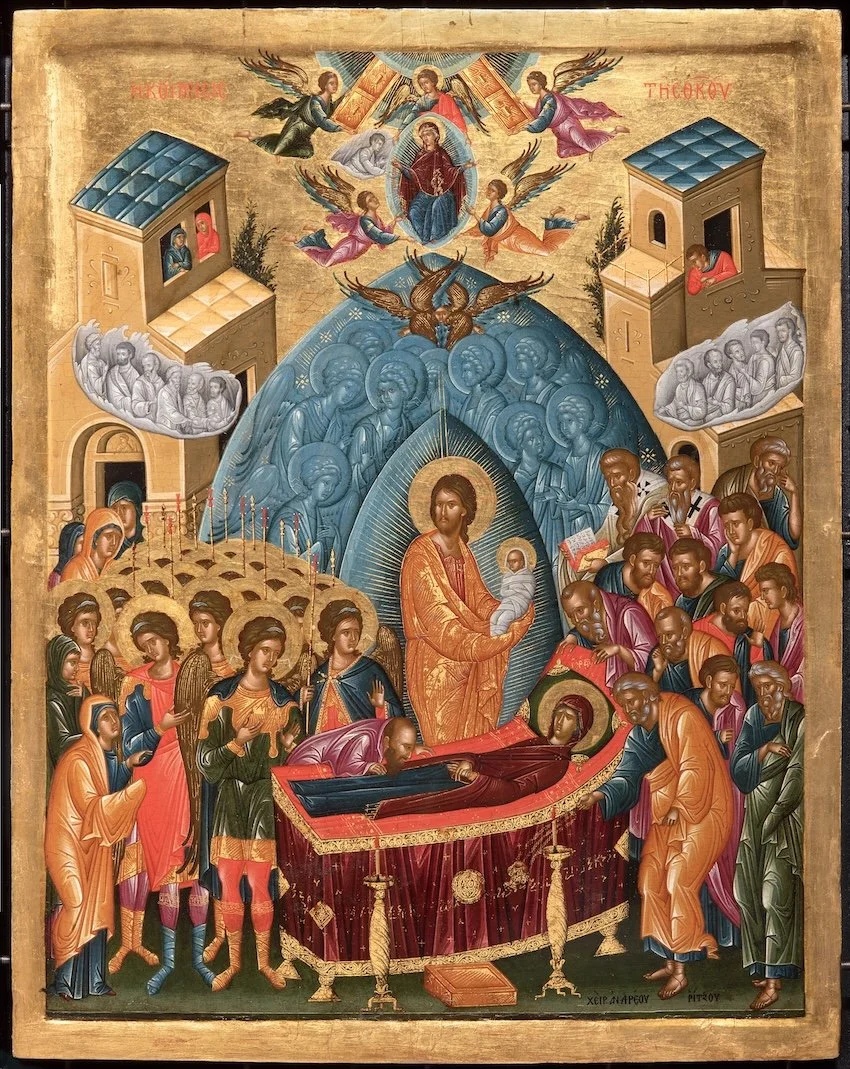
V. The Dormition (Falling Asleep)
The earthly life of the Theotokos ended in the event known as the Dormition.
Gathering of Apostles: Tradition holds that the Apostles were miraculously gathered from the ends of the earth to be present at her death.
Translation to Heaven: Like her Son, she died, but her body did not see corruption. She was translated to heaven to stand at the right hand of Christ, where she continues to intercede for the world.