Who are the Saints?
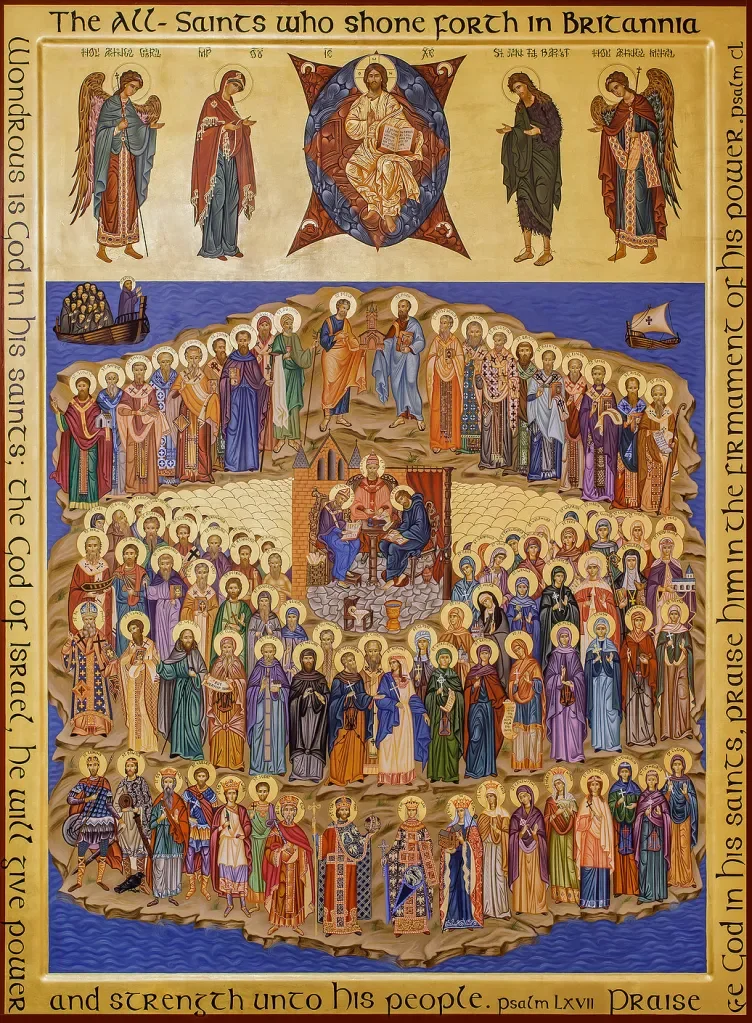
The doctrine of the Church comes alive in the lives of true believers—the saints—who literally share in the holiness of God ("Be holy, for I am holy" — 1 Peter 1:16).
In a Broad Sense: All members of the Church are called "saints" (hagioi) because they belong to Christ and partake of His holiness (e.g., St. Paul writing to the "saints in Ephesus").
In a Narrow Sense: The term describes those who have finished the course and attained that holiness: the Prophets, Apostles, Martyrs, and Ascetics who act as witnesses to the truth of the Gospel.
The Theotokos: Honored "above all" is the Virgin Mary, the Mother of God, who was chosen to be the vehicle of the Incarnation.
Classifications of Saints
While all share the same holiness, saints are classified by the particular aspect of their service or struggle:
Apostles: Those sent to proclaim the faith.
Evangelists: Those who announced and wrote the Gospels.
Prophets: Those directly inspired to speak God’s word.
Martyrs: Those who died for the faith.
Confessors: Those who suffered for the faith but did not die from it.
The "Holy Ones": Monastics (monks and nuns).
The "Righteous": Holy laypeople.
Fools for Christ: A unique category of saints who feigned madness or totally disregarded worldly norms (clothes, housing, reputation) to witness to the Kingdom of Heaven without compromise (1 Cor 4:10).
Worship vs. Veneration
Worship (Latreia): Belongs solely to God (the Holy Trinity).
Veneration/Honor: Orthodox Christians show reverence and honor to the saints, just as one honors the Bible, the Cross, or a respected person on earth. It is natural to honor the woman who gave birth to God or the martyrs who died for Him, but this is distinct from adoration due to God alone.
Intercession: Praying to Saints
God of the Living: Citing Mark 12:27, the text reminds us that God is "not the God of the dead, but of the living." The saints are alive in Christ.
Asking for Prayer: "Praying to" saints is simply asking them to pray for us, just as we ask friends on earth to pray for us. It is based on the biblical command to "pray for one another" (James 5:16).
Not "Instead Of": Asking for a saint's intercession is done in addition to praying directly to God, never instead of it.
Reading the Lives of Saints
There are volumes of written "Lives of the Saints" in the Orthodox tradition.
Discernment Required: Because many were written in the Middle Ages, they may contain literary embellishments or exaggerated miracles added for edification or to stress the saint's innocence.
Spiritual Value: Despite these additions, the "sound kernel of truth" remains. Even the legendary elements often convey authentic Christian meaning and the vision of God, man, and the world.
The Saints