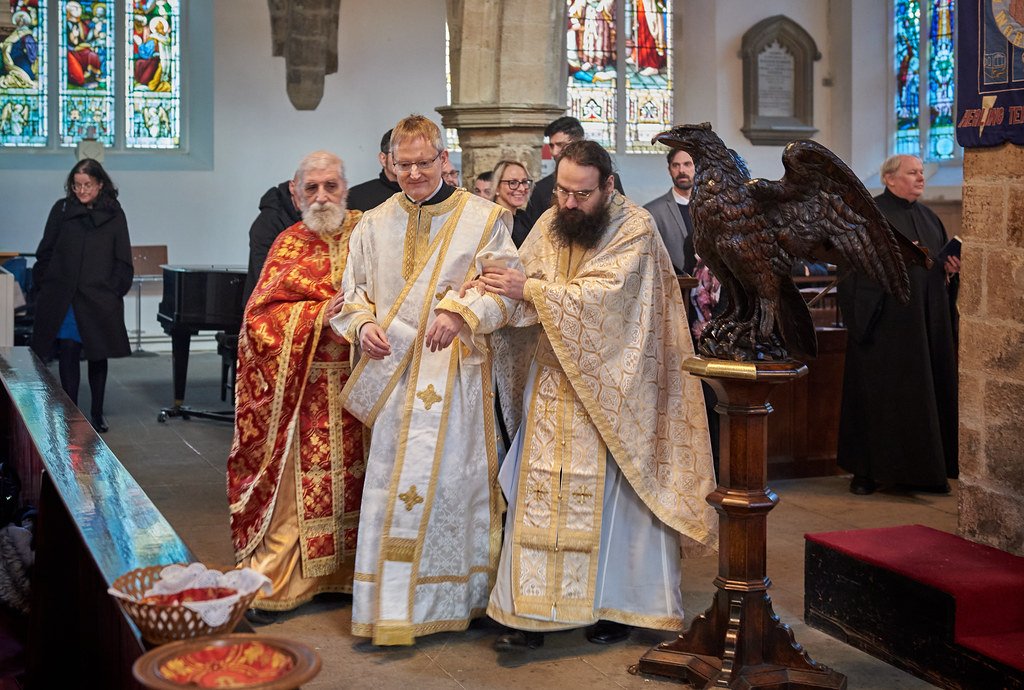
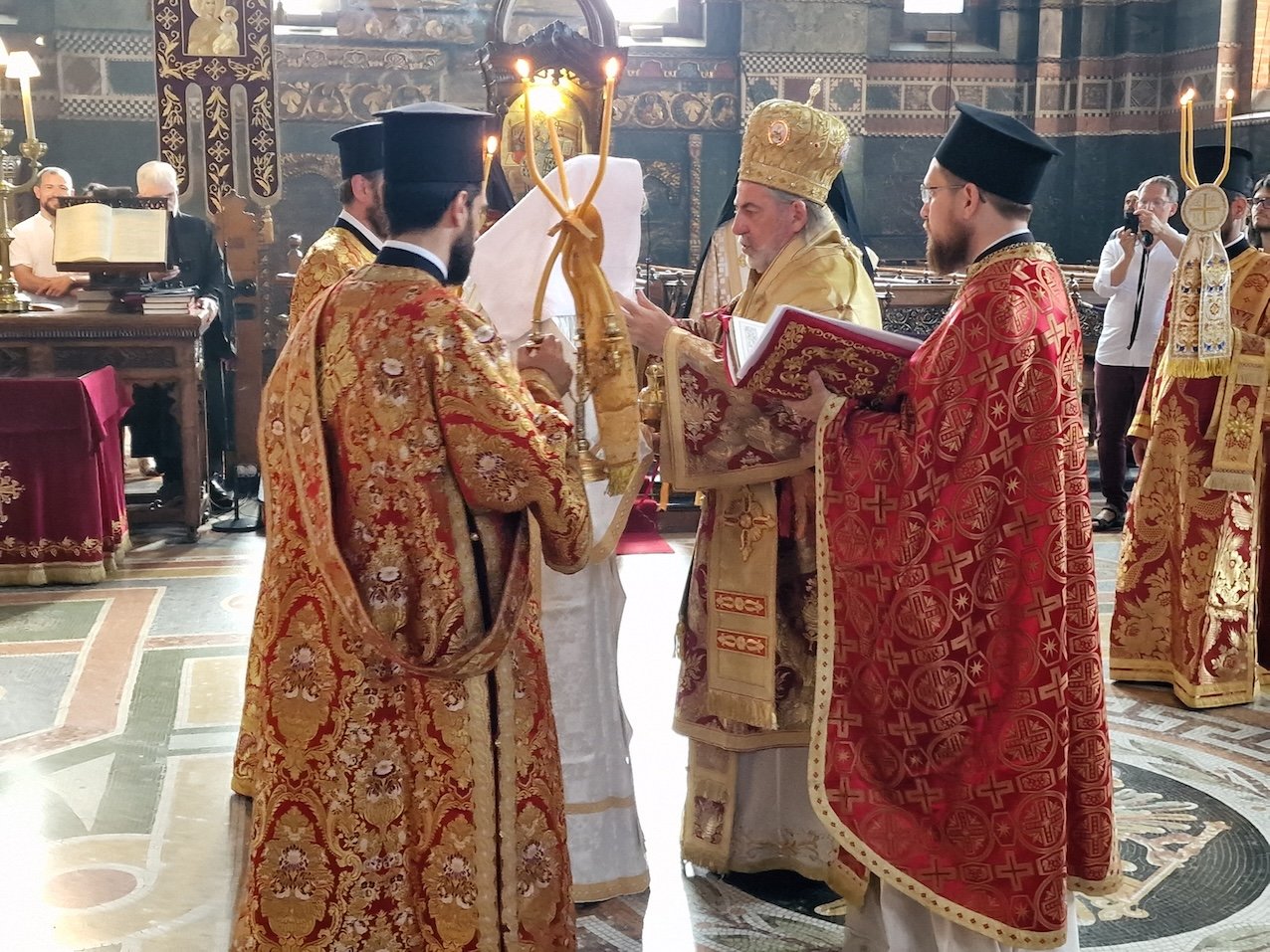
Ordination
The Nature of Priesthood
In Orthodox theology, Christ is the only true Priest, Pastor, and Teacher. He has not abandoned His Church but remains its unique head.
Manifestation, Not Substitution: The clergy do not act instead of an absent Christ (as "vicars" or substitutes). Rather, through the grace of the Holy Spirit, they manifest His presence.
The Function: Through His ministers, Christ continues to act as Shepherd, Teacher, Healer, and High Priest. The sacrament guarantees the continuity and unity of the Church from the Apostles until the Kingdom of God.
The Major Orders
The priesthood is divided into three major orders. Ordination to these ranks is called cheirotonía ("stretching out of hands").
1. Bishop (Epískopos)
Role: The "Overseer." The Bishop holds the fullness of the priesthood. He is the visible centre of unity for the local Church and the successor to the Apostles.
Authority: He alone has the power to ordain other clergy. No sacrament (Baptism, Eucharist) is valid without his consent (symbolised by the antimension cloth on the altar).
Requirements: Since the 6th century, bishops must be celibate (usually chosen from monastic or widowed clergy).
2. Priest (Presbyter)
Role: The "Elder." He leads the local parish, teaches the people, and celebrates the Divine Liturgy and other sacraments (Baptism, Marriage, Confession, Unction) on behalf of the Bishop.
Dependence: He cannot function apart from his Bishop. He possesses no "private" powers; his authority is derived entirely from his unity with the Bishop and the Church.
Requirements: He may be married, but only if the marriage took place before ordination. He cannot remarry if his wife dies.
3. Deacon (Diákonos)
Role: The "Minister" or "Servant." He does not perform sacraments on his own but assists the Bishop and Priest.
Liturgical Function: He calls the people to prayer, reads the Gospel, and censes the church. He symbolises the angels: his stole (orarion) represents angelic wings, and he moves between the altar (heaven) and the nave (earth).
Requirements: Like priests, they may be married if the marriage occurred prior to ordination.
The Minor Orders
Below the major orders are the minor orders, initiated through a blessing called cheirothesía ("placing of hands").
Subdeacon: Assists in the sanctuary, handling the sacred vessels and guarding the Holy Altar.
Reader / Cantor (Psáltis):
Reader: Tonsured to read the Epistles and Old Testament prophecies.
Cantor: leads the congregation in chanting hymns and responses.
Key Rules on Marriage
One Marriage: A man may be ordained to the priesthood (diaconate or presbyterate) if he is married, but it must be his first marriage.
Timing: Marriage must occur before ordination. If a single man is ordained, he must remain celibate.
No Remarriage: If a priest's or deacon's wife dies, he is not permitted to remarry and continue his ministry.