The Liturgical Meaning of Holy Week
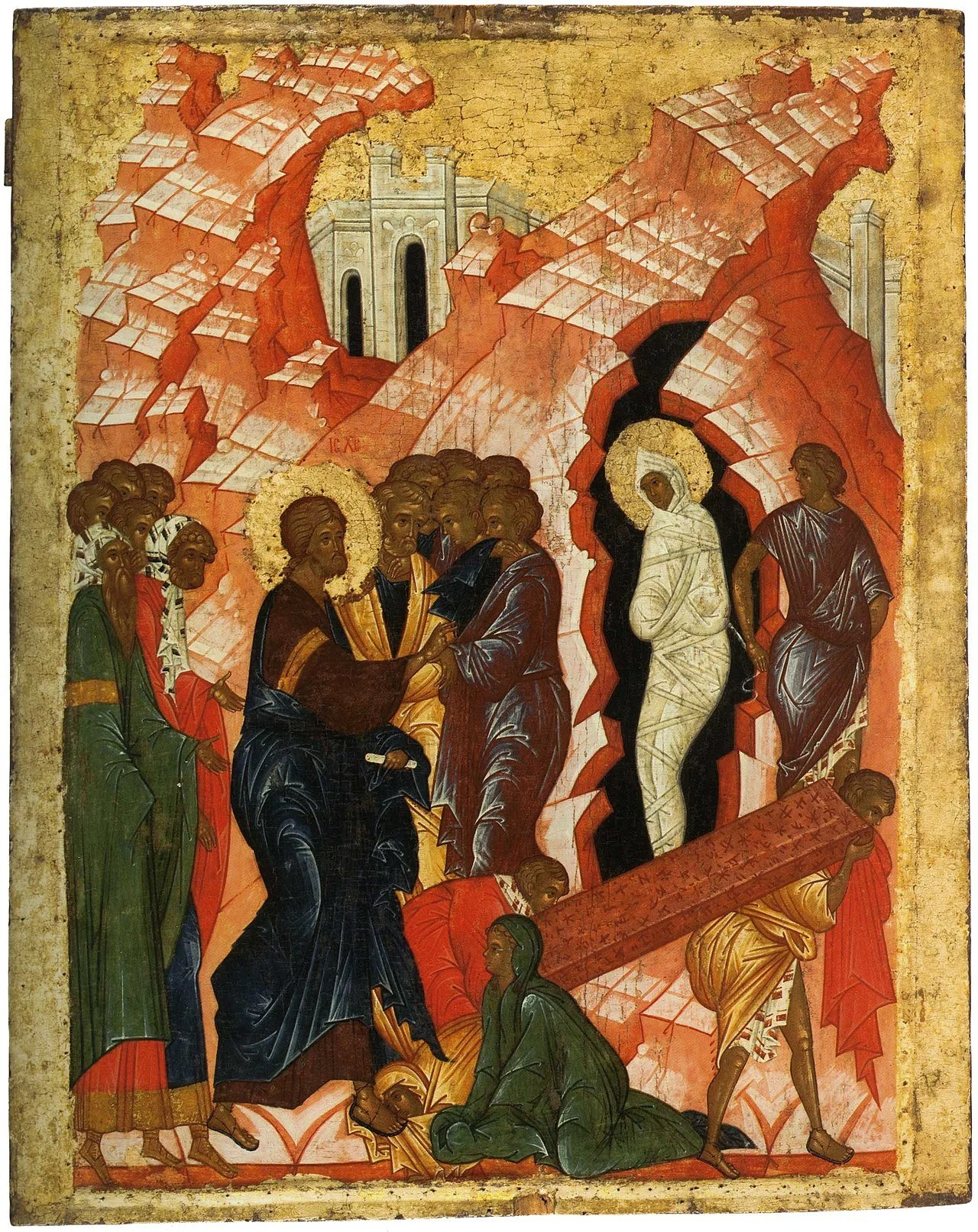
Saturday of Lazarus
“Having fulfilled Forty Days… we ask to see the Holy Week of Thy Passion.”
With these words sung at Vespers of Friday, Lent comes to its end and we enter into the annual commemoration of Christ’s suffering, death, and Resurrection. It begins on the Saturday of Lazarus.
The double feast of Lazarus’ resurrection and the Entrance of the Lord to Jerusalem (Palm Sunday) is described in liturgical texts as the “beginning of the Cross” and is to be understood within the context of Holy Week. The common Troparion of these days explicitly affirms that by raising Lazarus from the dead, Christ confirmed the truth of the general resurrection.
It is highly significant that we are led into the darkness of the Cross by one of the twelve major feasts of the Church. Light and joy shine not only at the end of Holy Week but also at its beginning.
All those familiar with Orthodox worship know the peculiar, almost paradoxical character of Lazarus Saturday services. It is a Sunday—a Resurrection service—held on a Saturday, a day usually devoted to the liturgical commemoration of the dead. The joy which permeates these services stresses one central theme: the forthcoming victory of Christ over Hades.
Hades is the Biblical term for that unescapable darkness and destruction that swallows all life and poisons with its shadow the whole world.
Now, with Lazarus’ resurrection, “death begins to tremble.”
The decisive duel between Life and Death begins here, giving us the key to the entire liturgical mystery of Pascha. In the early Church, Lazarus Saturday was called the “announcement of Pascha”; it anticipates the wonderful light and peace of the next Saturday—the Great and Holy Saturday, the day of the Lifegiving Tomb.
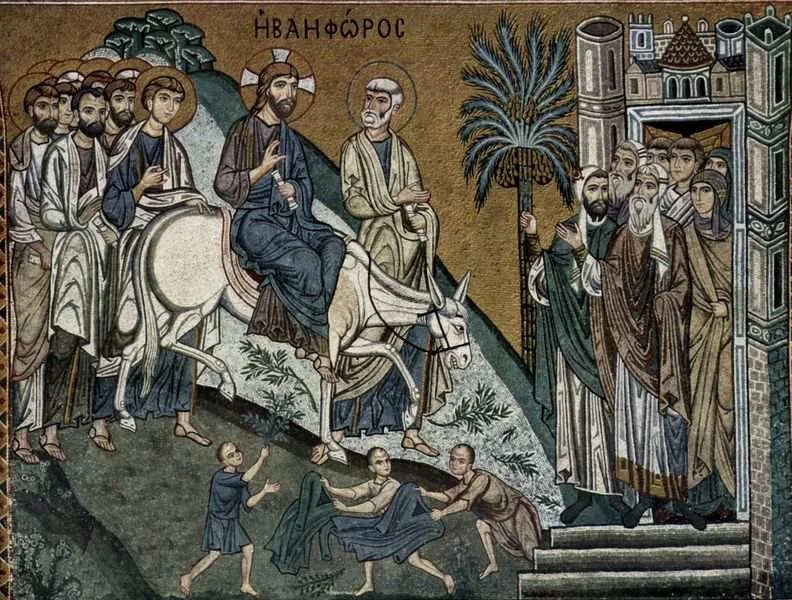
Palm Sunday: The Entrance
From the liturgical point of view, the Saturday of Lazarus is the pre-feast of Palm Sunday—the Entrance of Our Lord into Jerusalem. Both feasts share a common theme of triumph and victory.
Saturday reveals the Enemy, which is Death.
Palm Sunday announces the meaning of victory as the triumph of the Kingdom of God, and the acceptance by the world of its only King, Jesus Christ.
In the life of Jesus, the solemn entrance into the Holy City was the only visible triumph. Up to that day, He consistently rejected all attempts to glorify Him. But six days before the Passover, He provoked and arranged this glorification by fulfilling the prophecy of Zacharias:
“Behold, Thy King cometh unto thee… lowly and riding upon an ass.” (Zac. 9:9)
He made it clear that He wanted to be acclaimed and acknowledged as the Messiah, the King, and the Redeemer of Israel. The Gospel narratives stress all these Messianic features: the Palms, the cry from the crowd of “Hosanna,” and the acclamation of Jesus as the Son of David.
The history of Israel now comes to its end. The purpose of that history was to prepare for the Kingdom of God, and now it is fulfilled. For the King enters His Holy City, inaugurating His Kingdom.
What This Means for Us Today
With palm branches in our hands, we identify ourselves with the people of Jerusalem, greeting the lowly King and singing Hosanna to Him. This serves as:
Our confession of Christ as our King and Lord.
A reminder of our Baptism, where we were made citizens of His Kingdom and promised our ultimate loyalty to it.
An acknowledgement of Jerusalem as the mystical centre of the world and the focal point of salvation history.
The Kingdom inaugurated in Jerusalem is a universal Kingdom. When we receive a palm branch from the priest, we renew our oath to our King and confess that everything in our life belongs to Christ. We proclaim the total responsibility of the Church for human history.
The Way of the Cross
We know, however, that the King whom we acclaim today is on His way to Golgotha, to the Cross, and to the grave. This short triumph is but the prologue to His sacrifice.
The branches in our hands signify our readiness and willingness to follow Him on this sacrificial way. They proclaim our faith in the final victory of Christ. The world may live as if God had not died on the Cross and Man in Him was not risen from the dead, but we, as Orthodox Christians, believe in the coming of the Kingdom in which God will be all in all.
Holy Monday, Tuesday, Wednesday: The End
These three days, which the Church calls Great and Holy, have within the liturgical development of Holy Week a very definite purpose. They place all its celebrations into the perspective of the End; they remind us of the eschatological meaning of Pascha.
The Bridegroom Services
On the evenings of Palm Sunday, Holy Monday, and Holy Tuesday, the Church anticipates the themes of the following days through the Matins services, popularly known as the Bridegroom Services (Nymphios). The central icon placed before the faithful is Christ the Bridegroom, but He is not depicted in glory; He wears the crown of thorns and the purple robe of mockery.
The recurring hymn of these evenings sets a tone of urgent watchfulness:
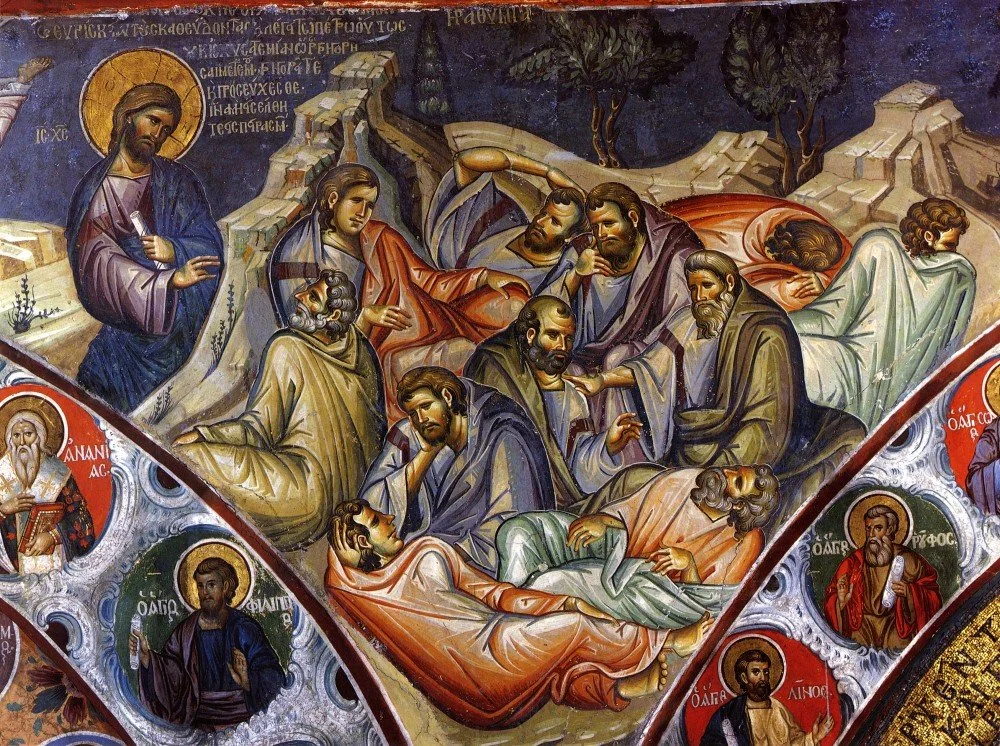
"Behold, the Bridegroom cometh at midnight, and blessed is the servant whom He shall find watching; and again, unworthy is the servant whom He shall find heedless."
Through the parables of the Barren Fig Tree and the Ten Virgins, these services emphasise that the Kingdom of God is at hand, and we must be spiritually awake. The Bridegroom comes not to a worldly banquet, but to the Cross, and His bridal chamber is the Tomb. We are called to keep the lamps of our souls lit with repentance and good works, lest the doors of the Kingdom be shut before us.
The End of "Normal" Life
So often the Holy Week is considered one of the beautiful traditions or customs, a self-evident part of our calendar. We take it for granted and enjoy it as a cherished annual event which we have observed since our childhood. We admire the beauty of its services, the pageantry of its rites and, last but not least, we like the fuss about the Paschal table. Then when all this is done, we resume our normal life. But do we understand that when the world rejected its Saviour, when “Jesus began to be sorrowful and very heavy….and his soul was exceedingly sorrowful even unto death,” when He died on the Cross, “normal life” came to its end?
For they were “normal” men who shouted, “Crucify Him!”, who spat on Him and nailed Him to the Cross. They hated and killed Him precisely because He was troubling their normal life. It was indeed a perfectly “normal” world which preferred darkness and death to light and life. By the death of Jesus, this “normal” world, this “normal” life was irrevocably condemned, or rather, they revealed their true and abnormal nature—their inability to receive the light.
“Now is the judgement of this world.” (John 12:31)
The Pascha (Passover) of Jesus signified its end to “this world” and it has been at its end since then. This end can last for hundreds of centuries; this does not alter the nature of time in which we live as the last time. The “fashion of this world passes away…” (1 Corinthians 7:31).
Great and Holy Wednesday: The Sacrament of Holy Unction
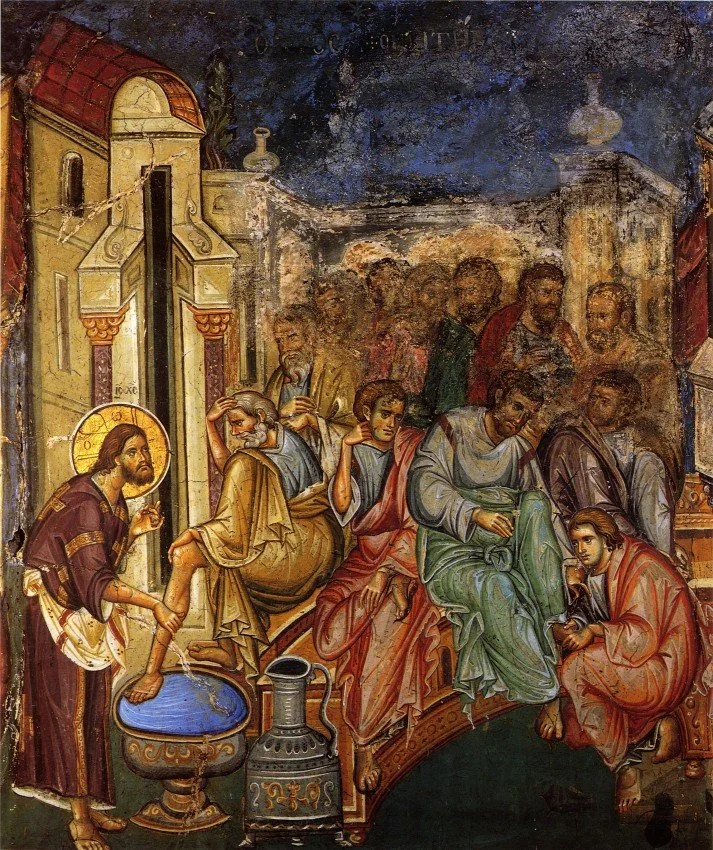
As we reach Great and Holy Wednesday, the liturgical focus turns to a stark contrast between two figures: the sinful woman who repented and anointed Christ’s feet with precious myrrh, and Judas Iscariot, the disciple who betrayed Him for thirty pieces of silver. One gave all she had out of love; the other sold his Master out of greed.
In response to our own spiritual sickness and our complicity in the sins of the world, the Church offers the Sacrament of Holy Unction (Euchelaion) on the evening of Holy Wednesday. This service of anointing is not a magical cure, nor is it only for the dying; it is a sacrament for the healing of soul and body for all the Orthodox faithful.
The Orthodox Church recognises that physical and spiritual ailments are deeply interconnected, stemming from our fallen state. By receiving the holy oil, we ask for God’s mercy, the forgiveness of our sins, and the healing of our brokenness. This profound act of physical and spiritual restoration prepares our hearts and bodies to participate worthily in the mystery of the Last Supper on Holy Thursday.
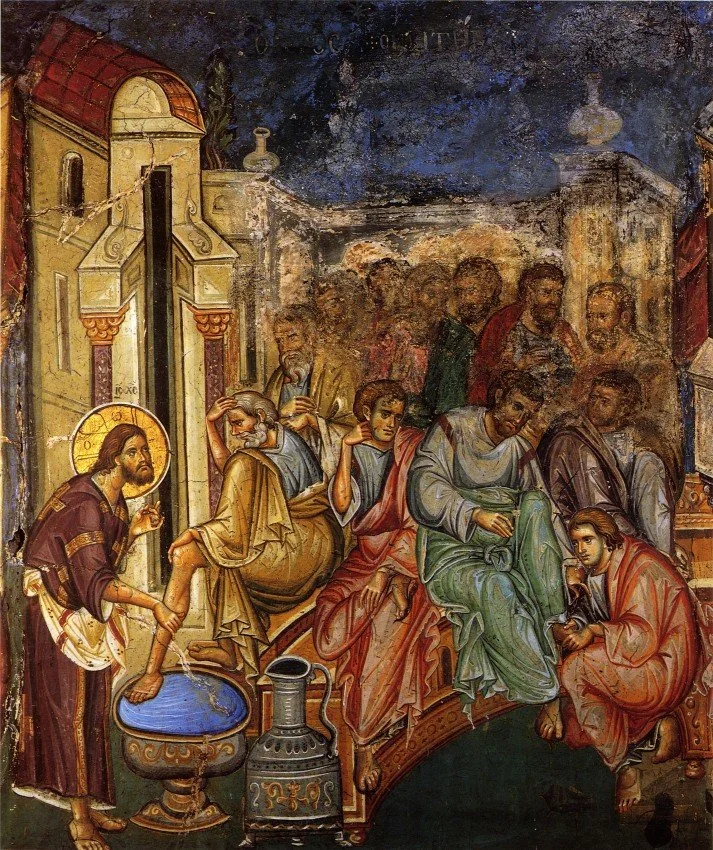
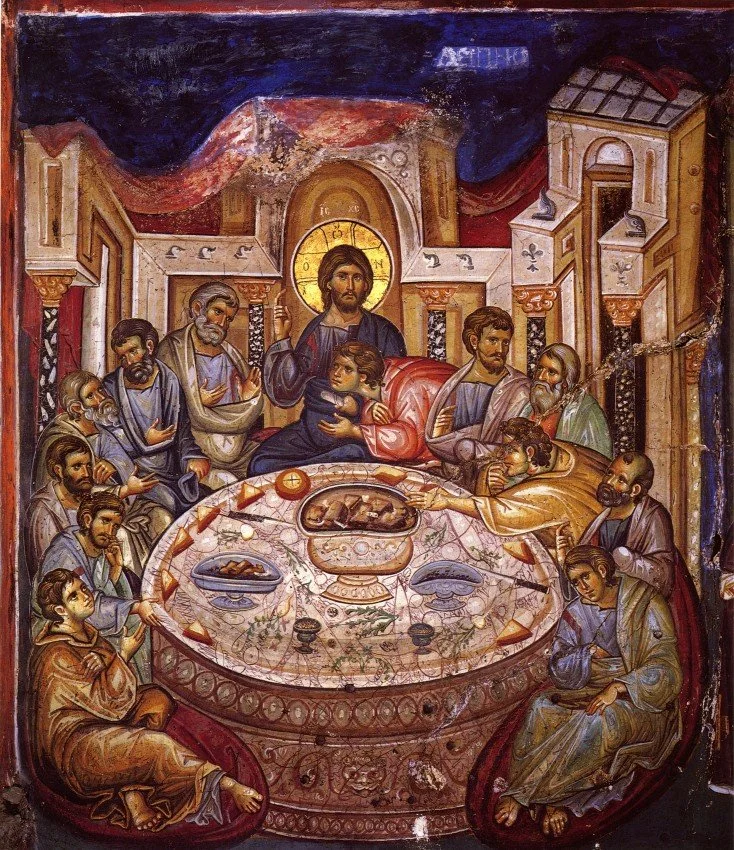
Holy Thursday: The Last Supper
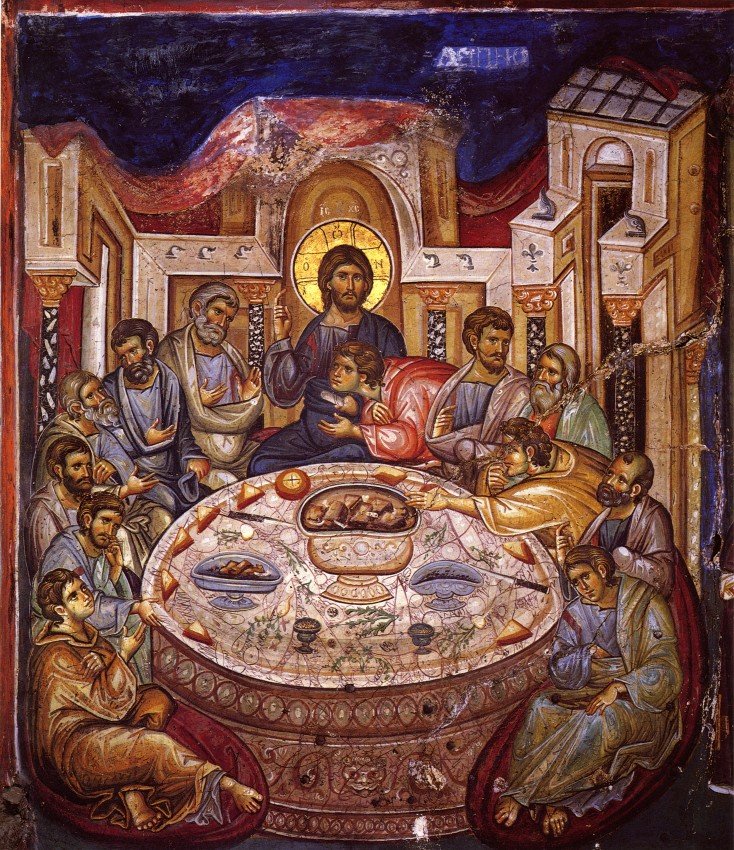
Two events shape the Liturgy of Great and Holy Thursday: the Last Supper and the betrayal of Jesus by Judas.
The Last Supper is the ultimate revelation of God’s redeeming love for man.
The betrayal by Judas reveals that sin, death, and self-destruction are also due to love—but a love directed at that which does not deserve love.
The mystery of this unique day challenges us with the choice on which our eternal destiny depends.
“Now before the Feast of the Passover, when Jesus knew that His hour was come… having loved His own which were in the world, He loved them unto the end…” (John 13:1)
To understand the Last Supper, we must see it as the consummation of Divine Love. Through sin, man betrayed God, yet God remained faithful. He began a new Divine work of redemption, fulfilled in Christ, the Son of God, Who became Man to restore life as communion with God. He revealed that God and His Kingdom are the real food, the real life of man.
He offered Himself as the true food, bringing the movement of Divine Love “unto the end” with the words: “Take, eat, this is My Body…” The Last Supper is the restoration of paradise—of life as Eucharist and Communion.
But this hour of ultimate love is also that of ultimate betrayal. Judas leaves the light of the Upper Room and goes into darkness because he loves the “silver” more than the Lord. Each year, Holy Thursday asks us: Do I respond to Christ’s love and accept it as my life, or do I follow Judas into the darkness?
Great and Holy Friday
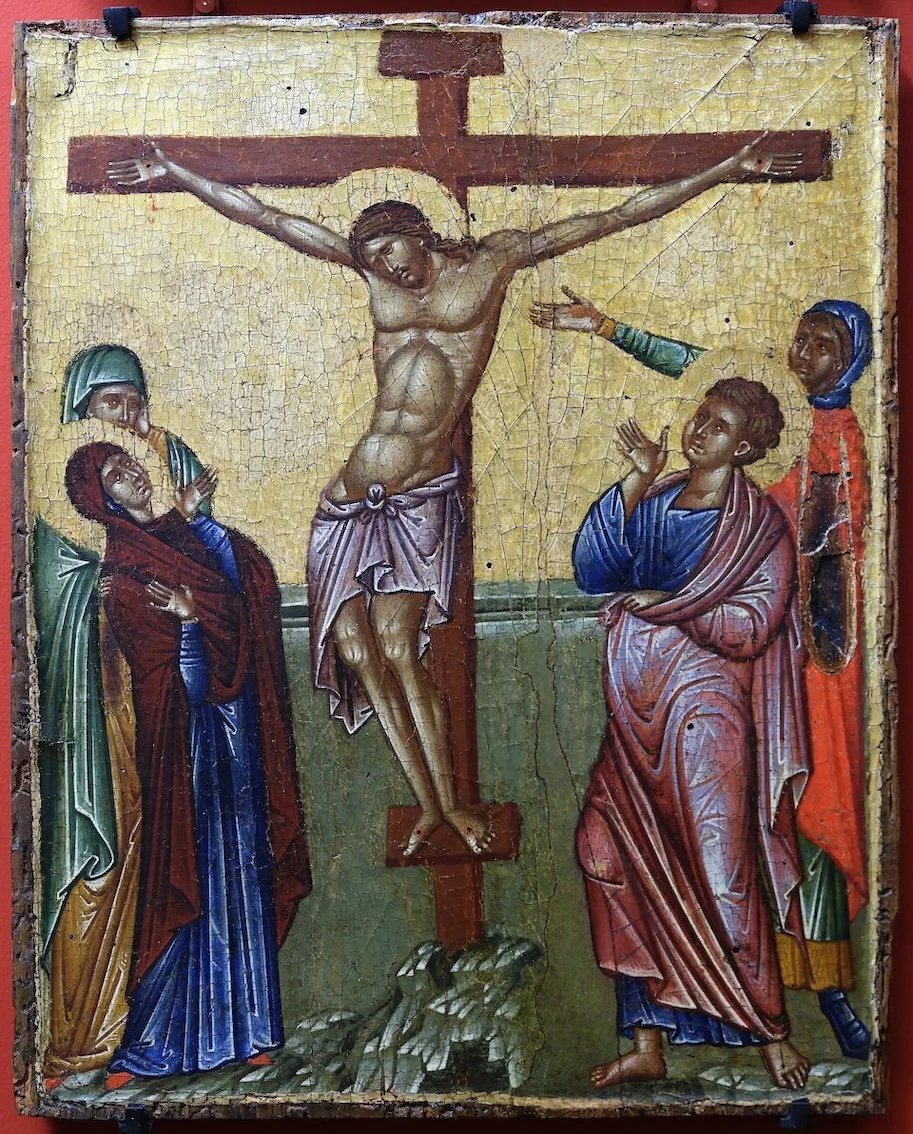
From the light of Holy Thursday, we enter into the darkness of Friday, the day of Christ’s Passion, Death, and Burial. In the early Church, this day was called the “Pascha of the Cross,” the beginning of the Passage whose full meaning will be revealed in the quiet of the Blessed Sabbath and the joy of the Resurrection.
We must realise that on Great and Holy Friday (Megali Paraskevi), the darkness is not merely symbolical. We often watch these services in a spirit of self-righteousness, thinking that bad men killed Christ long ago, while we are good Christians.
Yet, Good Friday deals not with the past alone. It is the day of Sin and Evil, inviting us to realise their awful reality in “this world.” Do we not often make ours the same logic of evil that led the Sanhedrin, Pontius Pilate, and the crowd to kill Christ? With whom would we have stood in Jerusalem?
Having condemned Christ to death, “this world” condemned itself to death. Inasmuch as we accept its spirit and its betrayal of God, we too are condemned. This is the dreadfully realistic meaning of Good Friday.
Great and Holy Saturday
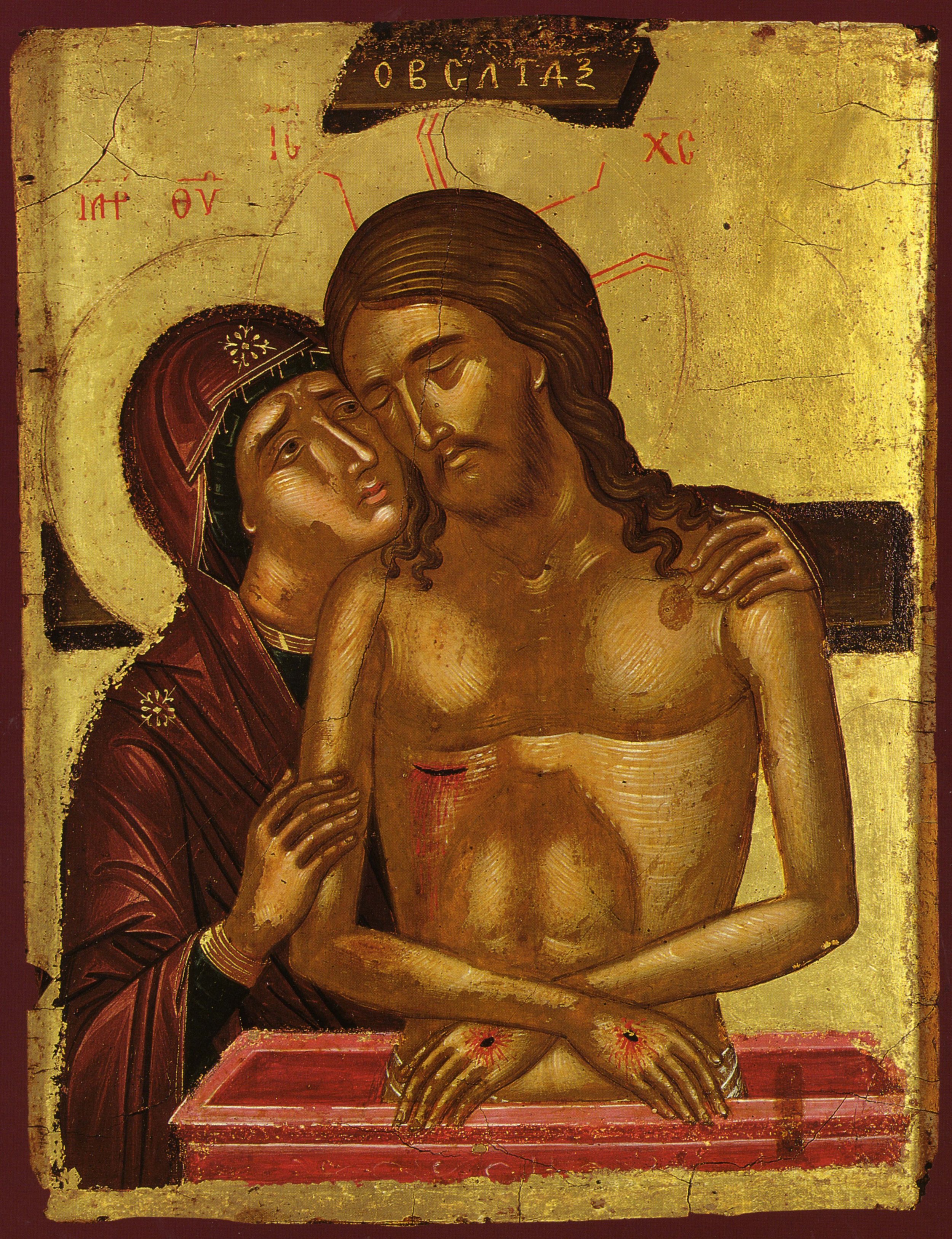
This is the Blessed Sabbath. The “Great and Holy Sabbath” is the day which connects Good Friday (the Cross) with the day of His Resurrection.
For many, these two events remain somehow disconnected—a day of sorrow simply replaced by a day of joy. But according to Orthodox Liturgical tradition, sorrow is not merely replaced; it is transformed into joy. Great Saturday is the day when victory grows from inside the defeat, when we are given to contemplate the death of death itself.
The Liturgy of Transformation
At the morning Matins of Holy Saturday, we begin with the sorrow of Friday. We approach the Epitaphion, standing at the grave of our Lord. Psalm 119 is sung, expressing the horror of creation before the death of Jesus.
Yet, a new theme immediately emerges. The death of Christ is the ultimate proof of His pure obedience to the Father's will.
The Descent into Hades: The Father desires this death so that the Son can enter Hades—the realm of Satan, Sin, and Death.
The Duel: The Righteous One is crucified and partakes in the darkness of Hades. But the One who dies has Life in Himself.
The Victory: The man Jesus dies, but this Man is the God-Man. Human death is assumed by God and destroyed from within, “trampled down by death.”
Death is overcome by Life. The Father gives His Only Begotten Son to death for the salvation of man.
Living in the "Middle Day"
After the Sabbath comes the first day of a new creation. But we must live through the long Great Saturday before we hear at midnight, ‘Christ is Risen!’
Christ has already risen, but our resurrection is yet to come. We will still have to die. Our reality in this world is the reality of Great Saturday. We are baptised into His death and partake of His Body and Blood, possessing the token of eternal life, yet death remains our inescapable share.
Our Christian existence is measured by expectation. We wait in love, hope, and faith for “the Resurrection and the life of the world to come.” Is not the wonderful quiet of Great Saturday the perfect symbol of our lives in this world? We are always in this “middle day,” waiting for the Pascha of Christ, preparing ourselves for the day without evening of His Kingdom.
(Source: http://www.orthodoxchristian.info/pages/Holy_Week.htm)
For Iconography of Passion Week. (please click on link)
The Liturgical Meaning of Holy Week
Saturday of Lazarus
“Having fulfilled Forty Days… we ask to see the Holy Week of Thy Passion.”
With these words sung at Vespers of Friday, Lent comes to its end and we enter into the annual commemoration of Christ’s suffering, death, and Resurrection. It begins on the Saturday of Lazarus.
The double feast of Lazarus’ resurrection and the Entrance of the Lord to Jerusalem (Palm Sunday) is described in liturgical texts as the “beginning of the Cross” and is to be understood within the context of Holy Week. The common Troparion of these days explicitly affirms that by raising Lazarus from the dead, Christ confirmed the truth of the general resurrection.
It is highly significant that we are led into the darkness of the Cross by one of the twelve major feasts of the Church. Light and joy shine not only at the end of Holy Week but also at its beginning.
All those familiar with Orthodox worship know the peculiar, almost paradoxical character of Lazarus Saturday services. It is a Sunday—a Resurrection service—held on a Saturday, a day usually devoted to the liturgical commemoration of the dead. The joy which permeates these services stresses one central theme: the forthcoming victory of Christ over Hades.
Hades is the Biblical term for that unescapable darkness and destruction that swallows all life and poisons with its shadow the whole world.
Now, with Lazarus’ resurrection, “death begins to tremble.”
The decisive duel between Life and Death begins here, giving us the key to the entire liturgical mystery of Pascha. In the early Church, Lazarus Saturday was called the “announcement of Pascha”; it anticipates the wonderful light and peace of the next Saturday—the Great and Holy Saturday, the day of the Lifegiving Tomb.
Palm Sunday: The Entrance
From the liturgical point of view, the Saturday of Lazarus is the pre-feast of Palm Sunday—the Entrance of Our Lord into Jerusalem. Both feasts share a common theme of triumph and victory.
Saturday reveals the Enemy, which is Death.
Palm Sunday announces the meaning of victory as the triumph of the Kingdom of God, and the acceptance by the world of its only King, Jesus Christ.
In the life of Jesus, the solemn entrance into the Holy City was the only visible triumph. Up to that day, He consistently rejected all attempts to glorify Him. But six days before the Passover, He provoked and arranged this glorification by fulfilling the prophecy of Zacharias:
“Behold, Thy King cometh unto thee… lowly and riding upon an ass.” (Zac. 9:9)
He made it clear that He wanted to be acclaimed and acknowledged as the Messiah, the King, and the Redeemer of Israel. The Gospel narratives stress all these Messianic features: the Palms, the cry from the crowd of “Hosanna,” and the acclamation of Jesus as the Son of David.
The history of Israel now comes to its end. The purpose of that history was to prepare for the Kingdom of God, and now it is fulfilled. For the King enters His Holy City, inaugurating His Kingdom.
What This Means for Us Today
With palm branches in our hands, we identify ourselves with the people of Jerusalem, greeting the lowly King and singing Hosanna to Him. This serves as:
Our confession of Christ as our King and Lord.
A reminder of our Baptism, where we were made citizens of His Kingdom and promised our ultimate loyalty to it.
An acknowledgement of Jerusalem as the mystical centre of the world and the focal point of salvation history.
The Kingdom inaugurated in Jerusalem is a universal Kingdom. When we receive a palm branch from the priest, we renew our oath to our King and confess that everything in our life belongs to Christ. We proclaim the total responsibility of the Church for human history.
The Way of the Cross
We know, however, that the King whom we acclaim today is on His way to Golgotha, to the Cross, and to the grave. This short triumph is but the prologue to His sacrifice.
The branches in our hands signify our readiness and willingness to follow Him on this sacrificial way. They proclaim our faith in the final victory of Christ. The world may live as if God had not died on the Cross and Man in Him was not risen from the dead, but we, as Orthodox Christians, believe in the coming of the Kingdom in which God will be all in all.
Holy Monday, Tuesday, Wednesday: The End
These three days, which the Church calls Great and Holy, have within the liturgical development of Holy Week a very definite purpose. They place all its celebrations into the perspective of the End; they remind us of the eschatological meaning of Pascha.
The Bridegroom Services
On the evenings of Palm Sunday, Holy Monday, and Holy Tuesday, the Church anticipates the themes of the following days through the Matins services, popularly known as the Bridegroom Services (Nymphios). The central icon placed before the faithful is Christ the Bridegroom, but He is not depicted in glory; He wears the crown of thorns and the purple robe of mockery.
The recurring hymn of these evenings sets a tone of urgent watchfulness:
"Behold, the Bridegroom cometh at midnight, and blessed is the servant whom He shall find watching; and again, unworthy is the servant whom He shall find heedless."
Through the parables of the Barren Fig Tree and the Ten Virgins, these services emphasise that the Kingdom of God is at hand, and we must be spiritually awake. The Bridegroom comes not to a worldly banquet, but to the Cross, and His bridal chamber is the Tomb. We are called to keep the lamps of our souls lit with repentance and good works, lest the doors of the Kingdom be shut before us.
The End of "Normal" Life
So often the Holy Week is considered one of the beautiful traditions or customs, a self-evident part of our calendar. We take it for granted and enjoy it as a cherished annual event which we have observed since our childhood. We admire the beauty of its services, the pageantry of its rites and, last but not least, we like the fuss about the Paschal table. Then when all this is done, we resume our normal life. But do we understand that when the world rejected its Saviour, when “Jesus began to be sorrowful and very heavy….and his soul was exceedingly sorrowful even unto death,” when He died on the Cross, “normal life” came to its end?
For they were “normal” men who shouted, “Crucify Him!”, who spat on Him and nailed Him to the Cross. They hated and killed Him precisely because He was troubling their normal life. It was indeed a perfectly “normal” world which preferred darkness and death to light and life. By the death of Jesus, this “normal” world, this “normal” life was irrevocably condemned, or rather, they revealed their true and abnormal nature—their inability to receive the light.
“Now is the judgement of this world.” (John 12:31)
The Pascha (Passover) of Jesus signified its end to “this world” and it has been at its end since then. This end can last for hundreds of centuries; this does not alter the nature of time in which we live as the last time. The “fashion of this world passes away…” (1 Corinthians 7:31).
Great and Holy Wednesday: The Sacrament of Holy Unction
As we reach Great and Holy Wednesday, the liturgical focus turns to a stark contrast between two figures: the sinful woman who repented and anointed Christ’s feet with precious myrrh, and Judas Iscariot, the disciple who betrayed Him for thirty pieces of silver. One gave all she had out of love; the other sold his Master out of greed.
In response to our own spiritual sickness and our complicity in the sins of the world, the Church offers the Sacrament of Holy Unction (Euchelaion) on the evening of Holy Wednesday. This service of anointing is not a magical cure, nor is it only for the dying; it is a sacrament for the healing of soul and body for all the Orthodox faithful.
The Orthodox Church recognises that physical and spiritual ailments are deeply interconnected, stemming from our fallen state. By receiving the holy oil, we ask for God’s mercy, the forgiveness of our sins, and the healing of our brokenness. This profound act of physical and spiritual restoration prepares our hearts and bodies to participate worthily in the mystery of the Last Supper on Holy Thursday.
Holy Thursday: The Last Supper
Two events shape the Liturgy of Great and Holy Thursday: the Last Supper and the betrayal of Jesus by Judas.
The Last Supper is the ultimate revelation of God’s redeeming love for man.
The betrayal by Judas reveals that sin, death, and self-destruction are also due to love—but a love directed at that which does not deserve love.
The mystery of this unique day challenges us with the choice on which our eternal destiny depends.
“Now before the Feast of the Passover, when Jesus knew that His hour was come… having loved His own which were in the world, He loved them unto the end…” (John 13:1)
To understand the Last Supper, we must see it as the consummation of Divine Love. Through sin, man betrayed God, yet God remained faithful. He began a new Divine work of redemption, fulfilled in Christ, the Son of God, Who became Man to restore life as communion with God. He revealed that God and His Kingdom are the real food, the real life of man.
He offered Himself as the true food, bringing the movement of Divine Love “unto the end” with the words: “Take, eat, this is My Body…” The Last Supper is the restoration of paradise—of life as Eucharist and Communion.
But this hour of ultimate love is also that of ultimate betrayal. Judas leaves the light of the Upper Room and goes into darkness because he loves the “silver” more than the Lord. Each year, Holy Thursday asks us: Do I respond to Christ’s love and accept it as my life, or do I follow Judas into the darkness?
Great and Holy Friday
From the light of Holy Thursday, we enter into the darkness of Friday, the day of Christ’s Passion, Death, and Burial. In the early Church, this day was called the “Pascha of the Cross,” the beginning of the Passage whose full meaning will be revealed in the quiet of the Blessed Sabbath and the joy of the Resurrection.
We must realise that on Great and Holy Friday (Megali Paraskevi), the darkness is not merely symbolical. We often watch these services in a spirit of self-righteousness, thinking that bad men killed Christ long ago, while we are good Christians.
Yet, Good Friday deals not with the past alone. It is the day of Sin and Evil, inviting us to realise their awful reality in “this world.” Do we not often make ours the same logic of evil that led the Sanhedrin, Pontius Pilate, and the crowd to kill Christ? With whom would we have stood in Jerusalem?
Having condemned Christ to death, “this world” condemned itself to death. Inasmuch as we accept its spirit and its betrayal of God, we too are condemned. This is the dreadfully realistic meaning of Good Friday.
Great and Holy Saturday
This is the Blessed Sabbath. The “Great and Holy Sabbath” is the day which connects Good Friday (the Cross) with the day of His Resurrection.
For many, these two events remain somehow disconnected—a day of sorrow simply replaced by a day of joy. But according to Orthodox Liturgical tradition, sorrow is not merely replaced; it is transformed into joy. Great Saturday is the day when victory grows from inside the defeat, when we are given to contemplate the death of death itself.
The Liturgy of Transformation
At the morning Matins of Holy Saturday, we begin with the sorrow of Friday. We approach the Epitaphion, standing at the grave of our Lord. Psalm 119 is sung, expressing the horror of creation before the death of Jesus.
Yet, a new theme immediately emerges. The death of Christ is the ultimate proof of His pure obedience to the Father's will.
The Descent into Hades: The Father desires this death so that the Son can enter Hades—the realm of Satan, Sin, and Death.
The Duel: The Righteous One is crucified and partakes in the darkness of Hades. But the One who dies has Life in Himself.
The Victory: The man Jesus dies, but this Man is the God-Man. Human death is assumed by God and destroyed from within, “trampled down by death.”
Death is overcome by Life. The Father gives His Only Begotten Son to death for the salvation of man.
Living in the "Middle Day"
After the Sabbath comes the first day of a new creation. But we must live through the long Great Saturday before we hear at midnight, ‘Christ is Risen!’
Christ has already risen, but our resurrection is yet to come. We will still have to die. Our reality in this world is the reality of Great Saturday. We are baptised into His death and partake of His Body and Blood, possessing the token of eternal life, yet death remains our inescapable share.
Our Christian existence is measured by expectation. We wait in love, hope, and faith for “the Resurrection and the life of the world to come.” Is not the wonderful quiet of Great Saturday the perfect symbol of our lives in this world? We are always in this “middle day,” waiting for the Pascha of Christ, preparing ourselves for the day without evening of His Kingdom.
(Source: http://www.orthodoxchristian.info/pages/Holy_Week.htm)
For Iconography of Passion Week: https://orthochristian.com/52858.html#image5224