Monasticism
The Monastic Vocation
The monastic life is highly valued in Orthodoxy as a "gift of God" for the service of the Body of Christ.
A Call to Repentance: The primary purpose of the monk or nun is not to perform a specific function (like teaching or social work) but to pursue personal repentance and the Christian ideal of love through prayer, fasting, poverty, chastity, and obedience.
Laymen, Not Clergy: Monks are typically laymen. A monastery will have only enough ordained priests to serve the community's liturgical needs. However, bishops are traditionally chosen from the monastic ranks.
Mission: Although the goal is seclusion and repentance, God often calls monks to become great missionaries (e.g., St. Herman of Alaska) or leaders; yet, one enters the monastery solely to save their soul, not to prepare for a career.
The Four Monastic Ranks
The progression in monastic life is personal, not tied to a fixed timeline. It is guided by the spiritual father or mother.
Novice (Obedience): The candidate lives in the monastery under supervision to test their vocation.
Riasa-Bearer: The individual is formally accepted and wears the black robe (riasa), but has not yet made full vows.
Small Schema (Profession): The "standard" professed monk/nun. They receive a new name, the schema (a cloth with the Cross), the veil, and the mantle (mantia). The service includes the tonsure (cutting of hair) and strict vows of obedience to the Abbot (Igoumenos) or Abbess (Igoumenia).
Great Schema: Reserved for those achieving the highest level of asceticism. It involves total seclusion and perpetual prayer. They receive a new name again and wear the distinctive Great Schema insignia.
Types of Monastic Life
Unlike the Roman Catholic Church, Orthodoxy does not have different "Orders" (e.g., Franciscans, Benedictines). Instead, different styles of life have developed organically:
Coenobitic ("Common Life"): The most common form. Monks or nuns live, work, eat, and pray together, holding all things in common.
Idiorhythmic: A semi-eremitic style where monks or nuns pray together liturgically but may live, work, and eat individually or in small groups.
Eremitic (Hermits/Anchorites): Monks or nuns who live in total seclusion, perhaps only joining the community for the Divine Liturgy on major feasts.
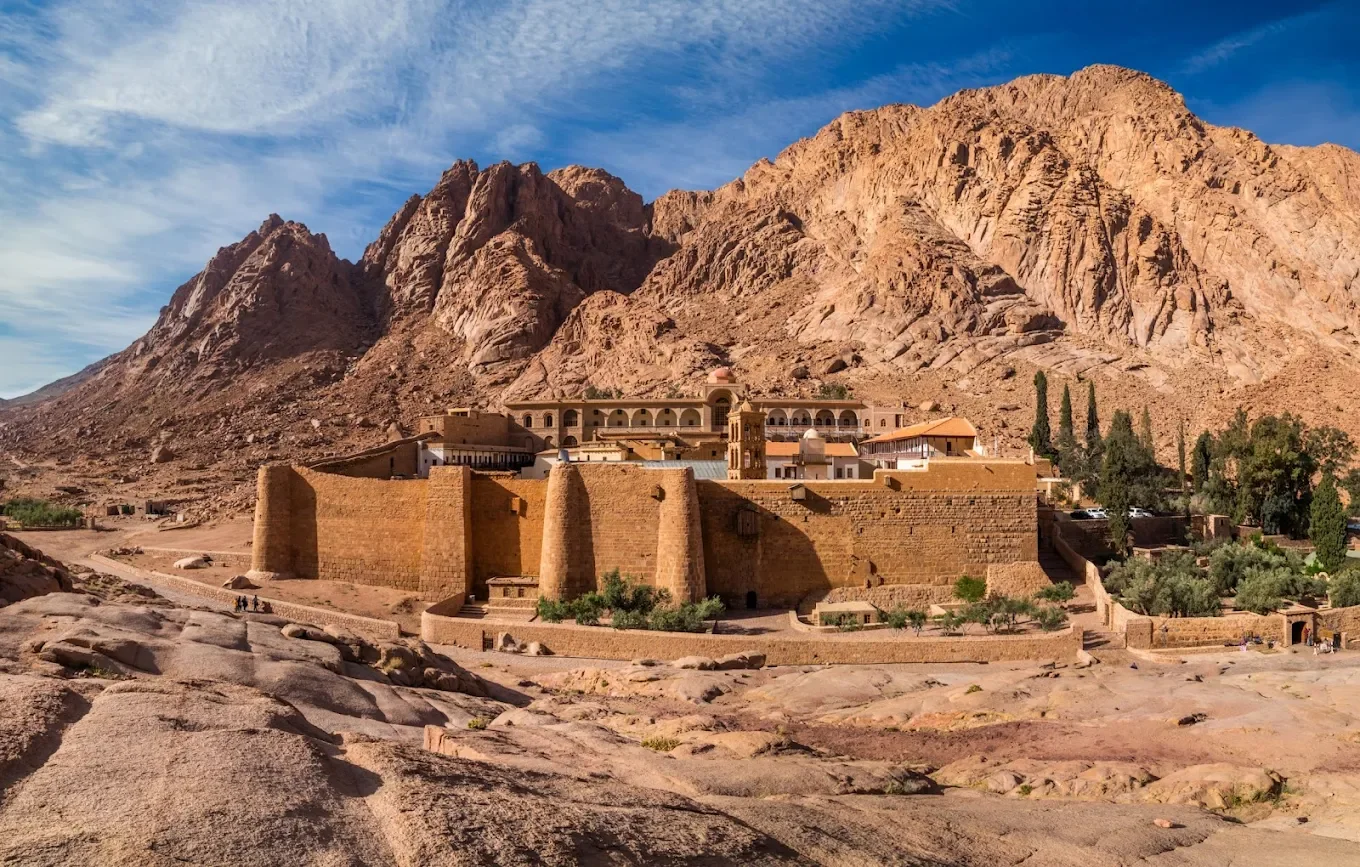
St Catherine Monastery in Sinai, Egypt
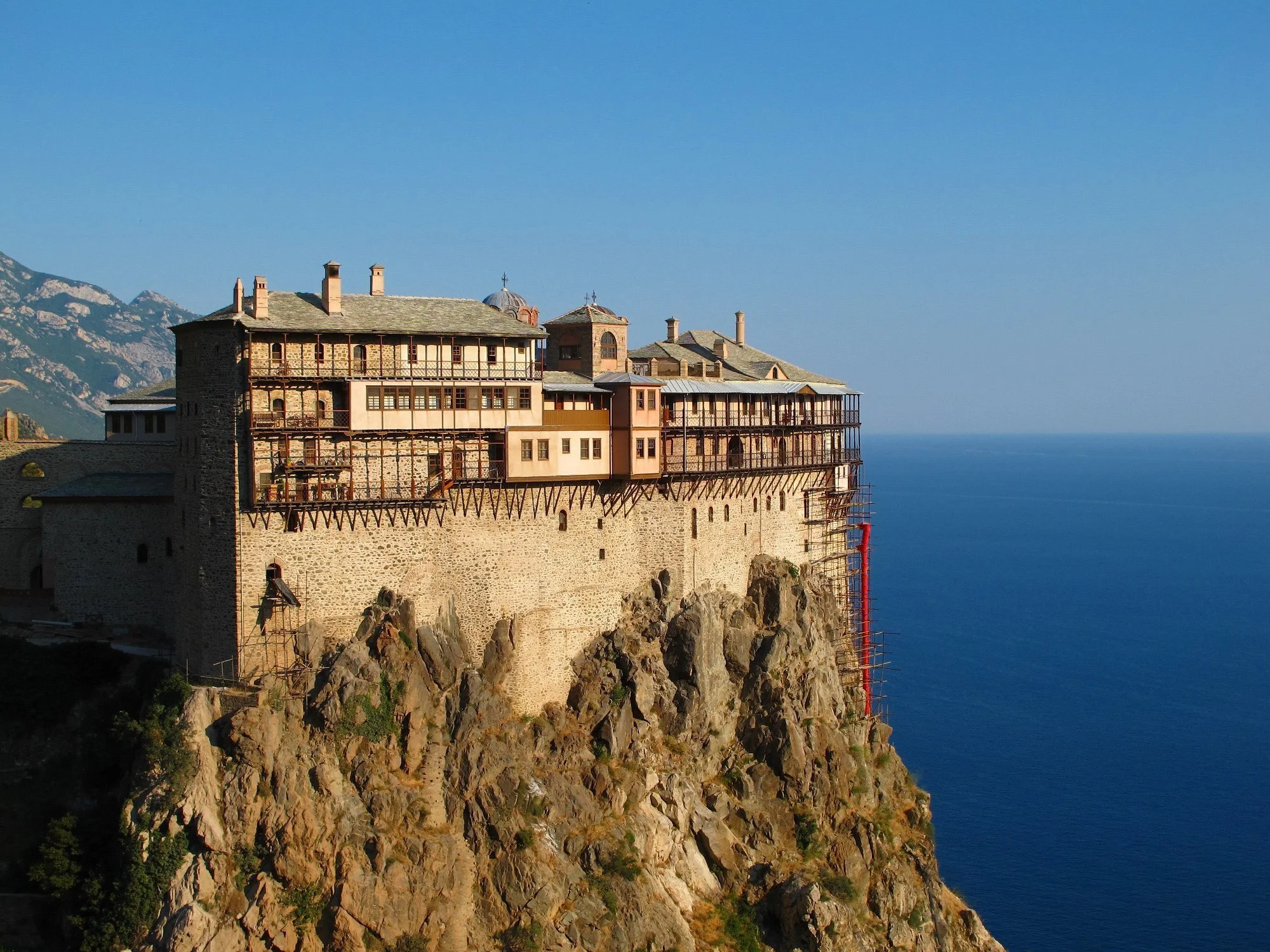
Simonopetras Monastery, Athos, Greece