The Nicene Creed
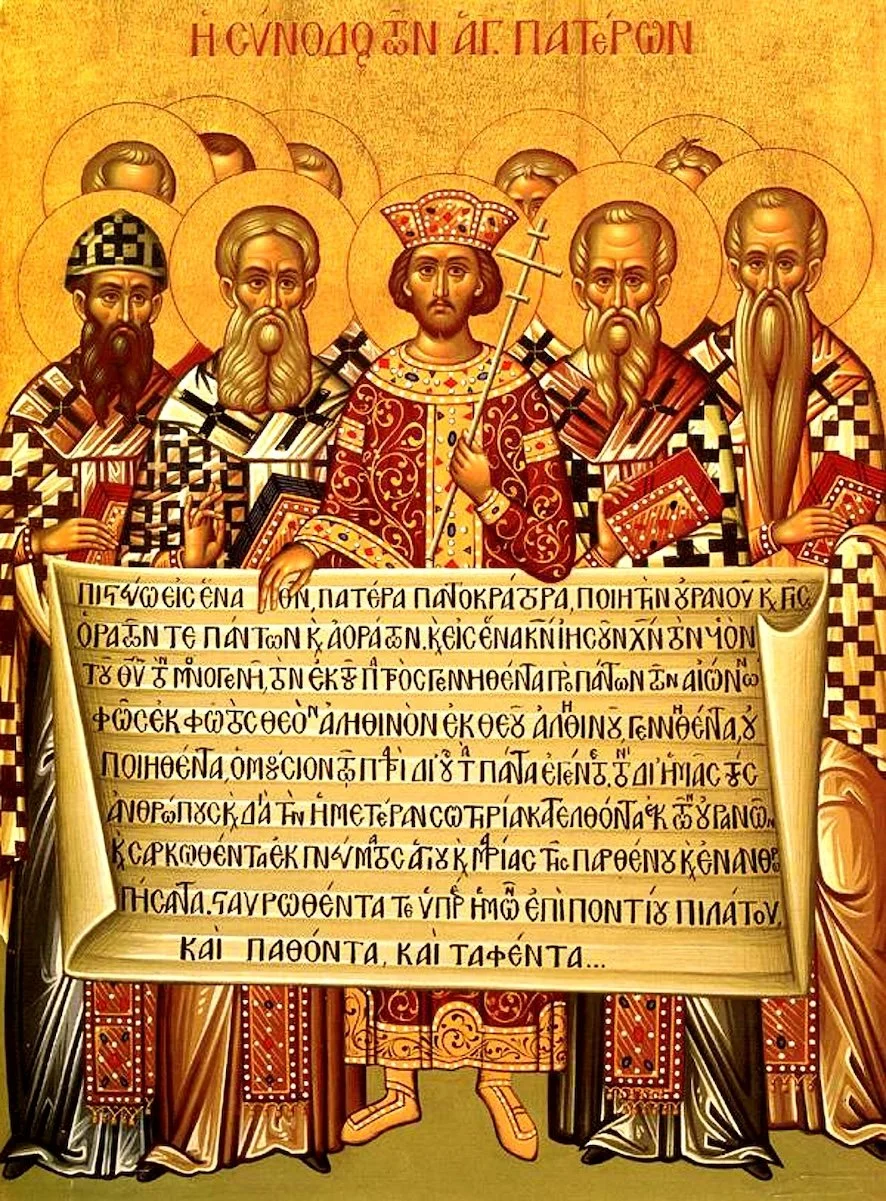
I believe in one God, Father almighty, Maker of heaven and earth, and of all things visible and invisible. And in one Lord, Jesus Christ, the only-begotten Son of God, begotten from the Father before all ages, Light from Light, true God from true God, begotten not made, consubstantial with the Father, through him all things were made. For our sake and for our salvation he came down from heaven, and was incarnate from the Holy Spirit and the Virgin Mary and became man. He was crucified also for us under Pontius Pilate, and suffered and was buried; he rose again on the third day, in accordance with the Scriptures, and ascended into heaven and is seated at the right hand of the Father. He is coming again in glory to judge the living and the dead, and his kingdom will have no end. And in the Holy Spirit, the Lord, the Giver of life, who proceeds from the Father, who together with Father and Son is worshipped and together glorified; who spoke through the Prophets. In one Holy, Catholic and Apostolic Church. I confess one Baptism for the forgiveness of sins. I await the resurrection of the dead and the life of the age to come. Amen.
The Symbol of Faith
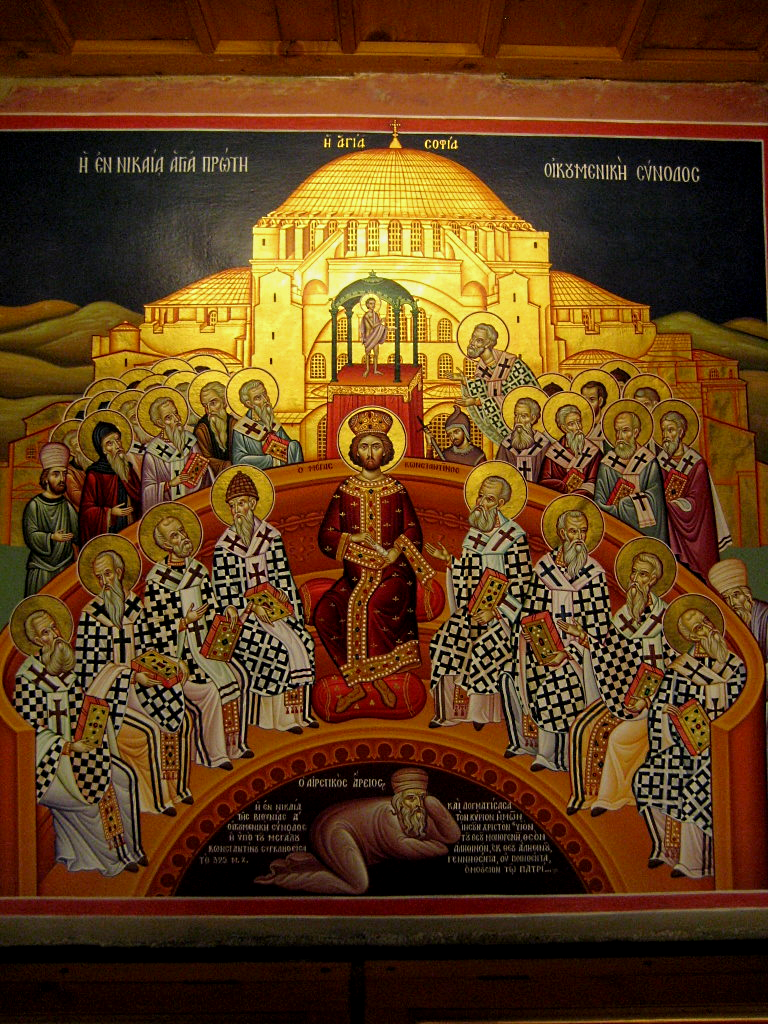
Formulated at the first two Ecumenical Councils (Nicea in 325 AD and Constantinople in 381 AD), this statement summarises the fundamental doctrines of the Christian faith.
A Living Confession: While often called the "Creed" (from Latin Credo, "I believe"), Orthodoxy calls it the Symbol of Faith. It is not a historical artifact but a living confession.
Baptismal Roots: It is primarily a baptismal creed—the formal confession made before entering the Body of Christ.
Personal Conviction: It is the only part of the Divine Liturgy recited in the first person ("I believe"). This emphasises that faith must be a personal conviction before it can be a corporate reality.
Daily Use: The faithful repeat this confession at every Divine Liturgy and during private morning and evening prayers.
I. God the Father & Creation
The Creed begins with belief in "One God." This is the God of Israel “I AM THAT I AM” (Yahweh), revealed fully by Jesus Christ as "Father."
Apophatic Theology: God is "ineffable, inconceivable, invisible." He is beyond all created categories.
Divine Love: God's defining characteristic is Love; He acts with compassion to seek the salvation of His creation.
Creation: God created the universe ex nihilo (out of nothing). There is no dualism; the physical world is "very good."
The Invisible World: God created the "bodiless powers" (angels)—purely spiritual beings with no material dimensions.
Demons: These are fallen angels led by Satan who attempt to separate humanity from God.
II. One Lord Jesus Christ
The longest section establishes the divinity of the Son and His work of salvation.
Divinity:
Only-Begotten: He is not a "son" by grace, but by nature.
Light of Light: Eternally generated from the Father, just as light is generated by the sun.
Begotten, Not Made: Crucially, the Son is uncreated. He shares the exact same essence (Homoousios) as the Father.
The Incarnation:
Purpose: He came strictly "for us men and for our salvation."
Method: He was incarnate of the Holy Spirit (divine origin) and the Virgin Mary (true humanity). He became fully man so that we might become like God.
Redemption:
Pontius Pilate: The mention of Pilate anchors the Gospel in real history; it is not a myth.
Voluntary Sacrifice: He accepted death to destroy it from the inside.
Resurrection & Ascension:
Victory: The Resurrection is the destruction of death and the central event of the faith.
Ascension: The Ascension of Christ is seen as man’s first entry into that divine glorification for which he was originally created
Judgment: He will come again in glory to judge the living and the dead; His Kingdom is eternal.
III. The Holy Spirit
The Creed affirms the full divinity of the Spirit against those who viewed Him as a created force.
Lord and Giver of Life: The Spirit is fully God and the source of life.
Procession: He "proceeds from the Father."
Note: The Orthodox maintain the original text without the filioque ("and the Son"), preserving the Father as the sole source of divinity.
Unity: He is worshipped and glorified together with the Father and the Son.
Prophecy: He is the one who spoke through the Prophets, linking the Old and New Testaments.
IV. The Church & The Future
The Creed concludes with the reality of the Church and Christian hope.
The Four Characteristics of the Church:
One: Christ has only one Body.
Holy: Sanctified by Christ, despite the sins of its members
Catholic: Universal, complete, and whole.
Apostolic: Built on the foundation of the Apostles and maintaining their teaching.
One Baptism: The sacrament of initiation is unrepeatable; it is a death to sin and a rebirth to righteousness.
Eschatology (The End Times):
Resurrection: We await the physical resurrection of the body, not just a disembodied afterlife.
The Age to Come: The ultimate hope is not just "heaven," but the new heaven and new earth—eternal life in the Kingdom of GOD