Holy Bible
What is the Bible?
The Bible is the collection of sacred writings of God’s People, divided into the Old Testament (writings before Christ) and the New Testament (writings after the coming of Christ). It is unified by a single message: the love of God for mankind, the fall of humanity, and their restoration through Jesus Christ.
The Nature of Scripture
The Orthodox Church views the Bible as the Word of God in human form.
Not Dictation: It did not fall from heaven ready-made, nor did God dictate it word-for-word to passive instruments.
Divine Inspiration: God inspired His people to produce writings that express His Truth and Will.
Human Element: The words are human, reflecting the culture, time, and style of the authors. While there may be incidental historical inaccuracies, the spiritual and doctrinal message remains authentic and without error.
Part I: The Old Testament
The preparation for the coming of Christ.
The Old Testament contains the sacred writings of the People of Israel (the Jews/Hebrews). These books are traditionally divided into four groups:
1. The Torah (The Law)
Also known as the Pentateuch (five books) or the Books of Moses. These cover the creation of the world, the history of the Patriarchs (Abraham, Isaac, Jacob), the Exodus from Egypt, and the giving of the Law.
Key Books: Genesis, Exodus, Leviticus, Numbers, Deuteronomy.
The Ten Commandments: Given to Moses on Mt. Sinai, these form the moral foundation of the Law (e.g., You shall have no other gods before me, Honor your father and mother, You shall not kill).
2. The Historical Books
These describe the entry into the Promised Land, the establishment of Jerusalem, the Temple, and the history of the kingdoms, exiles, and restorations.
Includes: Joshua, Judges, Kingdoms (Samuel/Kings), Chronicles, Ezra, Nehemiah, and the Maccabees.
3. The Writings (Wisdom Books)
These are books of prayer, song, poetry, and moral instruction.
Key Books: Psalms (the main prayer book of the Church), Proverbs (moral instruction), and Job (meditation on suffering).
4. The Prophets
Prophets were the "conscience" of God’s people, issuing warnings and offering hope. Their writings speak to their immediate historical context but also point toward the future coming of the Messiah.
Includes: Isaiah, Jeremiah, Ezekiel, Daniel, and the twelve "minor" prophets.
Note on the Canon: The Orthodox Old Testament includes Deuterocanonical books (such as Tobit, Judith, Wisdom of Solomon, and Maccabees). While some modern editions place these in an "Apocrypha" appendix, the Orthodox Church considers them sacred Scripture.
Part II: The New Testament
The witness that Christ has come and saved the world.
The New Testament consists of 27 books, written in Greek, the common language of the time.
1. The Four Gospels
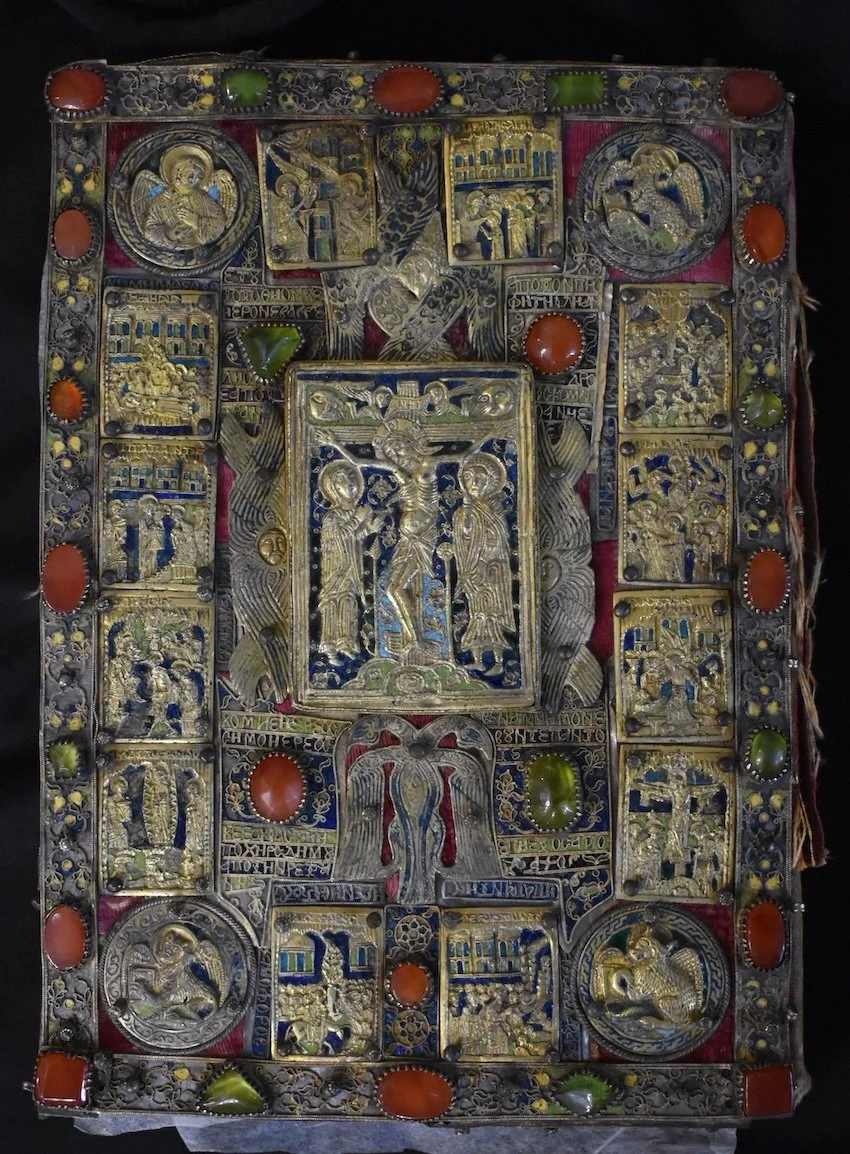
The Gospels are not merely biographies; they are testimonies written by disciples to witness that Jesus is the Messiah. In the Orthodox Church, the Book of the Gospels is always enthroned on the altar table.
Gospel Author Distinctive Characteristics
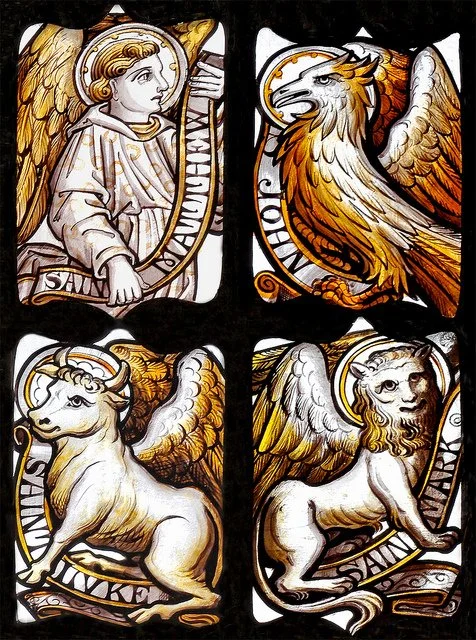
Matthew: One of the 12 Apostles; Written for Jewish Christians; emphasises Jesus as the fulfilment of Old Testament prophecy. Contains the Sermon on the Mount.
Mark: Disciple (tradition of Peter); Likely the earliest and shortest Gospel; focuses on Jesus’ authoritative words and miraculous works.
Luke: Physician/Disciple of Paul; The most complete "history," including the birth of John the Baptist and Jesus. Emphasises God's mercy to the poor and sinners.
John: The "Beloved Disciple; "The "Theological Gospel." Distinct from the three Synoptic Gospels (above). Focuses on Jesus as the eternal Word of God (Logos) and includes long discourses on His divinity.
2. History of the Early Church
The Acts of the Apostles: Written by St. Luke, this continues the story of the Gospel, detailing the Ascension, Pentecost, and the missionary journeys of the Apostles.
3. The Epistles (Letters)
Pauline Epistles: Letters written by St. Paul to specific communities (e.g., Romans, Corinthians) dealing with theology and morals.
Catholic Epistles: Letters addressed to the whole (catholic) Church by other Apostles (James, Peter, John, Jude).
4. The Apocalypse (Revelation)
A book of symbolic visions given to St. John regarding the ultimate triumph of good over evil and the renewal of the world. It is the only book not read liturgically in the Orthodox Church.
How to Read the Bible
The Orthodox tradition emphasizes that Scripture must be interpreted within Sacred Tradition—the life and experience of the Church. The Bible came out of the Church; the Church did not come out of the Bible.
Three Levels of Interpretation:
Literal: The plain historical meaning (e.g., Moses leading Israel out of Egypt).
Allegorical/Typological: The symbolic or prophetic significance (e.g., Moses as a "type" of Christ leading humanity out of the slavery of sin).
Spiritual: The personal meaning for the soul (e.g., the Exodus as a symbol of the soul's journey from sin to grace).